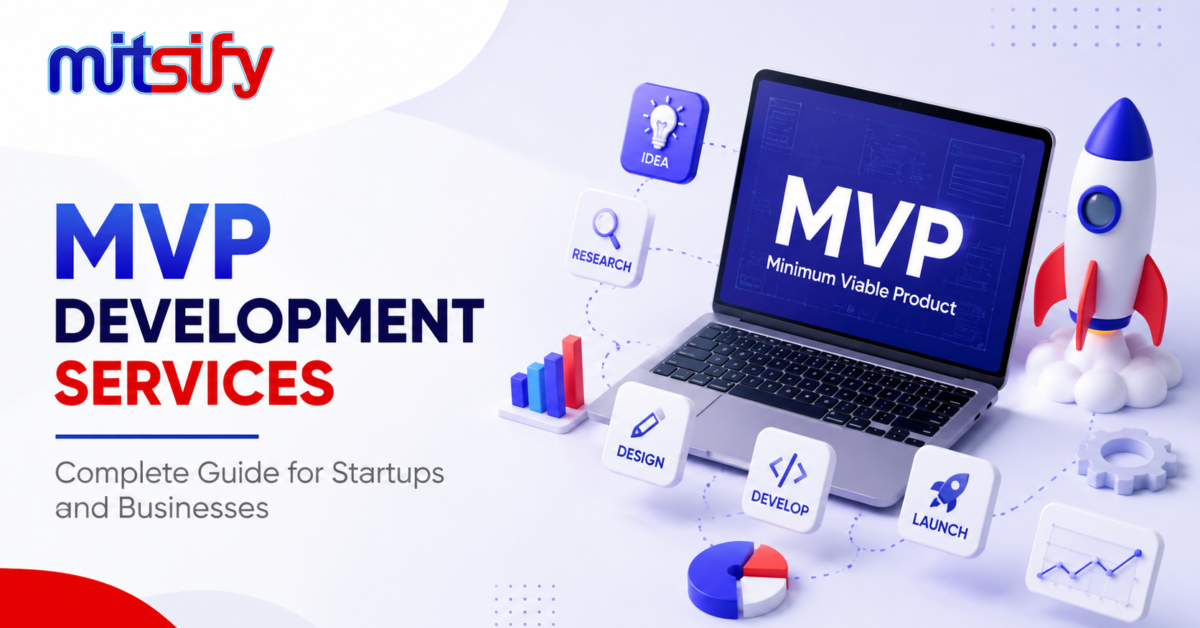
MVP Development is an effective approach for businesses and startups that want to launch a software product with essential features, validate their business idea, and collect real user feedback before investing heavily in a complete product.
A Minimum Viable Product, commonly called an MVP, is an early version of a digital product that contains the core features required to solve a specific user problem. Instead of developing every possible feature from the beginning, businesses can launch a focused version, learn from users, and improve the product step by step.
Whether you are planning a SaaS platform, mobile application, web application, marketplace, or custom business software, MVP software development can help you test the product concept before moving into large-scale development.
What Is MVP Development?
MVP Development is the process of designing and developing a Minimum Viable Product with the essential functionality required for an initial product launch.
The objective is not to build an incomplete or low-quality product. Instead, the objective is to focus development efforts on the most important features that provide value to the target users.
After launch, businesses can collect user feedback, analyze product usage, identify improvements, and gradually add additional features.
What Does MVP Stand For?
MVP stands for Minimum Viable Product.
A Minimum Viable Product is an initial version of a product that includes the minimum set of useful features required to deliver its core purpose and gather feedback from real users.
For example, if a business wants to create an online appointment platform, the first MVP may include:
- User registration
- Business or service listing
- Appointment booking
- Availability management
- Basic notifications
- Admin management
Advanced analytics, loyalty programs, complex integrations, and other secondary features can be introduced in later versions.
Why Is MVP Development Important?
Developing a complete software product can require significant time, resources, and investment. MVP development allows businesses to validate important assumptions before committing to a large development roadmap.
Key benefits include:
- Faster product launch
- Focused development
- Early user feedback
- Better understanding of customer requirements
- Reduced initial development scope
- Opportunity to validate product-market assumptions
- Ability to prioritize future features
- Continuous product improvement
MVP Development vs Full Product Development
| MVP Development | Full Product Development |
|---|---|
| Focuses on essential features | Includes a broader feature set |
| Smaller initial scope | Larger development scope |
| Designed for early validation | Designed for a mature product |
| Can launch earlier | Usually requires more development time |
| Feedback guides future development | More functionality is planned from the beginning |
| Suitable for testing an initial concept | Suitable for established product requirements |
How Does MVP Development Work?
A successful MVP development process starts with understanding the problem that the product is intended to solve. The development team then identifies the target users, defines essential functionality, creates the initial design, develops the product, tests it, and prepares it for launch.
Step 1: Define the Business Idea
The first step is to clearly define the business problem, target audience, product objective, and expected outcome.
A clear product definition helps the team determine which features are necessary for the initial version.
Step 2: Identify Target Users
Understanding the target users is important for creating a useful MVP. User requirements, workflows, pain points, and expectations should be considered during the planning stage.
Step 3: Define Core Features
Not every planned feature should be included in the first version. Features should be prioritized based on their importance to the core product experience.
Features can be categorized as:
- Must Have: Essential features required for the MVP
- Should Have: Useful features that can be added soon
- Could Have: Features that can be considered later
- Future Features: Features planned for future product versions
Step 4: Create User Flows
User flows describe how users move through the application. Creating these flows helps simplify the product experience and identify unnecessary steps.
Step 5: Design the MVP
UI/UX design is created based on the prioritized features and user flows. Wireframes, visual designs, and interactive prototypes can be prepared before development.
You can also read our UI/UX Design: Complete Guide for Businesses to understand the importance of user-focused product design.
Step 6: Develop the MVP
Developers build the core product functionality using an appropriate technology stack. The development process may include frontend development, backend development, database integration, APIs, authentication, and third-party integrations.
Step 7: Testing and Quality Assurance
The MVP should be tested before launch to identify functional issues, usability problems, performance concerns, and security-related issues.
Step 8: Launch the MVP
Once the core product has been tested, it can be released to a selected group of users or the intended target audience.
Step 9: Collect User Feedback
User feedback provides valuable information about what works, what does not work, and which features users actually need.
Step 10: Improve the Product
Based on feedback and product usage, businesses can prioritize improvements and gradually develop new versions of the product.
What Features Should an MVP Include?
The features of an MVP depend on the product type and business requirements. However, common MVP features may include:
- User registration and login
- User profile
- Core product functionality
- Dashboard
- Search and filtering
- Basic notifications
- Payment integration when required
- Admin panel
- Basic reports
- Essential API integrations
The goal is to include enough functionality to provide the core value of the product without unnecessarily expanding the initial development scope.
MVP App Development
MVP App Development is useful for startups and businesses planning mobile applications for Android, iOS, or multiple platforms.
A mobile app MVP can focus on the most important user journey and core functionality before expanding into a larger application.
Common mobile MVP features include:
- Login and registration
- User profiles
- Core app functionality
- Push notifications
- Search
- Payments
- Location-based features
- Basic analytics
Businesses planning a mobile MVP can also explore Mobile App Development Services.
MVP Web Development
An MVP can also be developed as a web application. Web-based MVPs can be accessed through browsers and are useful for SaaS products, marketplaces, business platforms, dashboards, and online services.
MVP web applications may include:
- Responsive web interface
- User authentication
- User dashboard
- Admin dashboard
- Database integration
- API integration
- Payment gateway
- Reports and analytics
For more information, explore our Web Application Development: Complete Guide.
SaaS MVP Development
SaaS MVP Development helps businesses test cloud-based software ideas with an initial set of essential features.
A SaaS MVP may include:
- User registration
- Subscription management
- User roles
- Dashboard
- Core application features
- Cloud database
- Payment integration
- Admin management
- Basic reporting
Once the SaaS product receives feedback from early users, additional modules and advanced functionality can be developed.
Learn more about SaaS Development: Complete Guide.
MVP Development for Startups
Startups often need to validate their product concept before investing significant resources into a complete application. MVP development provides a structured way to build an initial version and learn from real users.
A startup MVP can help answer important questions such as:
- Do users need this product?
- Which features are most valuable?
- Are users able to understand the product?
- Which workflows need improvement?
- What should be developed next?
These insights can help shape the product roadmap based on actual user feedback instead of assumptions alone.
MVP Development for Existing Businesses
MVP development is not limited to startups. Established businesses can also use MVP methodology when introducing a new digital service, internal software system, mobile application, or SaaS product.
For example, a business may first develop a limited version of a new internal application, test it with employees, collect feedback, and then expand the system across the organization.
MVP Development Technology Stack
The technology stack depends on the product requirements, target platform, scalability expectations, integrations, and development roadmap.
Common technologies may include:
- Frontend: React, Angular, Vue, HTML, CSS, JavaScript
- Mobile: Flutter, React Native, Kotlin, Swift
- Backend: Node.js, PHP, Python, Java, .NET
- Database: MySQL, PostgreSQL, MongoDB
- API: REST API, GraphQL
- Cloud: AWS, Azure, Google Cloud
- Design: Figma and prototyping tools
The right technology should be selected based on the product’s actual requirements rather than choosing technologies simply because they are popular.
MVP Development and API Integration
Many modern MVPs need to connect with external services such as payment gateways, maps, email services, SMS platforms, CRM systems, analytics tools, or other business applications.
APIs make it possible for different software systems to exchange data and communicate with each other.
Read our API Development & Integration: Complete Guide to learn more about API-based software integration.
MVP Development and Cloud Software
Cloud technology can provide flexible infrastructure for modern MVPs. Depending on the product requirements, businesses can use cloud services for application hosting, databases, storage, APIs, monitoring, and other infrastructure needs.
Cloud-based architecture can also support future product growth when the MVP evolves into a larger application.
Learn more about Cloud-Based Software Development: Complete Guide.
How Much Does MVP Development Cost?
The cost of MVP development depends on the complexity of the product and the functionality required for the initial version.
Important factors that influence MVP development cost include:
- Number of features
- Number of screens
- Web or mobile platform
- Number of user roles
- UI/UX design requirements
- Backend complexity
- Database requirements
- Third-party integrations
- Payment gateway integration
- API development
- Cloud infrastructure
- Testing requirements
- Maintenance and support
A clearly defined MVP scope can help businesses estimate development requirements more accurately.
How Long Does MVP Development Take?
The development timeline depends on the scope and complexity of the MVP. A simple MVP with a limited number of screens and workflows may be developed faster than a complex SaaS platform, marketplace, or business application.
The timeline can be affected by:
- Feature count
- Design complexity
- Number of platforms
- Backend requirements
- API integrations
- Third-party services
- Testing requirements
- Client feedback and revisions
Common MVP Development Mistakes
Businesses can face challenges when the MVP scope is not properly defined. Some common mistakes include:
- Trying to include too many features
- Ignoring user requirements
- Building without clear product goals
- Skipping UX planning
- Ignoring application security
- Not testing the core user journey
- Failing to collect user feedback
- Building features without prioritization
- Choosing technology without considering long-term requirements
How to Prioritize MVP Features
Feature prioritization is one of the most important parts of MVP planning. Each feature should be evaluated based on its importance to the core user problem and business objective.
Consider the following questions:
- Is the feature required for the core product?
- Does it solve an important user problem?
- Will users need it during the first version?
- Can the product work without it?
- Can the feature be added in a future release?
This approach helps keep the initial product focused and manageable.
MVP Development Process at a Software Company
A professional MVP development company can help businesses move from product idea to initial launch through a structured process.
- Requirement analysis
- Business and product discovery
- User research
- Feature prioritization
- UX and UI design
- Technical architecture
- MVP development
- API and third-party integration
- Quality assurance testing
- Deployment
- User feedback collection
- Continuous improvement
MVP Development Best Practices
- Start with a clearly defined user problem
- Keep the first version focused
- Prioritize essential features
- Design the core user journey carefully
- Build scalable foundations where practical
- Use secure authentication and data handling
- Test the most important workflows thoroughly
- Monitor application performance
- Collect real user feedback
- Use feedback to prioritize future releases
When Should You Choose MVP Development?
MVP development can be a good approach when you have a new product idea and want to validate the concept before developing the complete product.
It can be suitable for:
- Startups launching a new product
- Businesses testing a new digital service
- SaaS product ideas
- Mobile application concepts
- Marketplace platforms
- New business automation software
- Internal business applications
- New e-commerce concepts
Frequently Asked Questions About MVP Development
What is an MVP in software development?
An MVP, or Minimum Viable Product, is an initial version of a software product that contains the essential features needed to provide its core value and collect feedback from early users.
Why should a startup build an MVP?
A startup can use an MVP to test its product concept, understand user requirements, gather feedback, and prioritize future development before building a larger product.
Is an MVP a low-quality product?
No. An MVP should provide a functional and usable experience for its intended purpose. The difference is that the initial version focuses on essential functionality instead of including every possible feature.
How much does MVP development cost?
MVP development cost depends on features, platforms, design requirements, integrations, backend complexity, testing, and other project requirements.
How long does it take to develop an MVP?
The timeline depends on the product scope, number of features, technical complexity, platforms, integrations, and testing requirements.
Can an MVP be developed as a mobile app?
Yes. An MVP can be developed for Android, iOS, or cross-platform environments depending on the business requirements and target users.
Can an MVP be converted into a full product?
Yes. An MVP can be improved and expanded based on user feedback, business requirements, product usage, and future development priorities.
What is SaaS MVP development?
SaaS MVP development is the process of building an initial cloud-based software product with the essential features required to launch and validate a SaaS business concept.
Should UI/UX design be included in MVP development?
Yes. A usable and understandable interface is important even for an MVP. UI/UX planning can help users complete the core product journey more easily.
Conclusion
MVP Development provides businesses and startups with a practical approach to launching a focused software product, learning from real users, and improving the product over time.
Instead of developing every feature at once, businesses can identify the most important functionality, create a usable initial product, launch it, collect feedback, and use those insights to guide future development.
Whether you are planning a SaaS platform, mobile application, web application, marketplace, or custom business software, a well-planned MVP can provide a strong starting point for the product development journey.
Related Articles
- SaaS Development: Complete Guide
- How Much Does SaaS Development Cost?
- SaaS MVP Development: Complete Guide
- UI/UX Design: Complete Guide for Businesses
- API Development & Integration: Complete Guide
- Custom Software Development: Complete Guide
- Cloud-Based Software Development: Complete Guide
- Mobile App Development: Complete Guide for Businesses
- Web Application Development: Complete Guide
Explore Mitsify Software Development Services
Mitsify helps businesses build digital products including SaaS applications, mobile applications, web applications, APIs, and custom software solutions.