Jewellery shops regularly receive old gold jewellery from customers for buyback, exchange and valuation. Before completing the transaction, the business needs to assess important details such as weight, purity, gold content and applicable valuation rates.
When these activities are handled manually, employees may need to use weighing machines, calculators, notebooks and separate billing records. This can make the process slower and increase the possibility of calculation or data-entry errors.
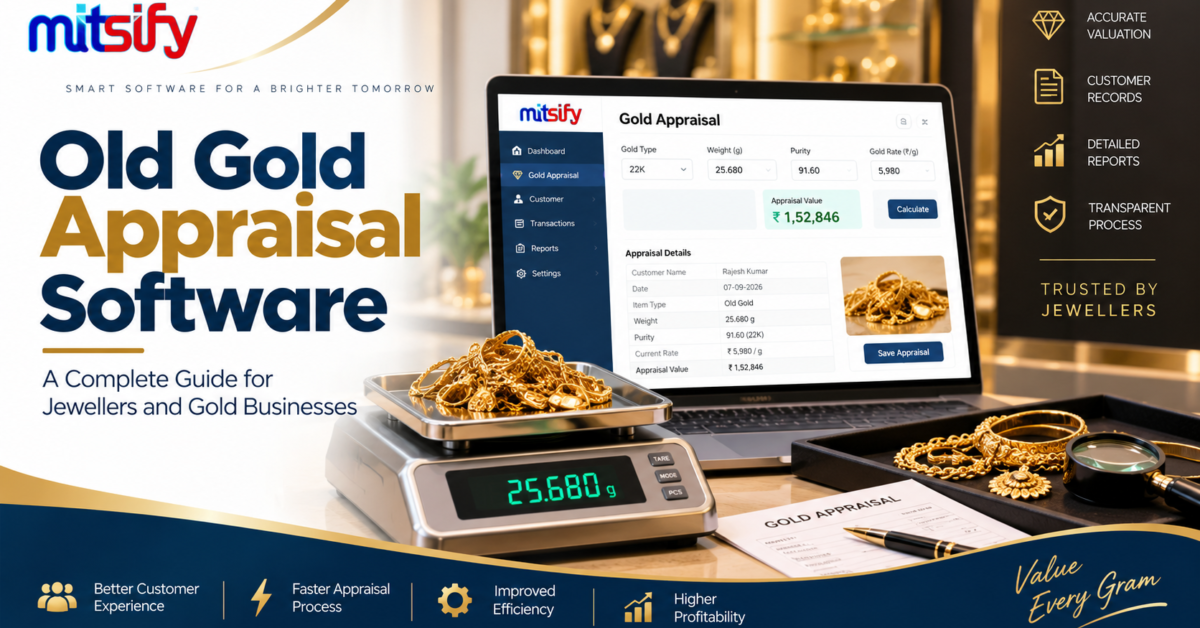
Old Gold Appraisal Software helps jewellery businesses organize the gold assessment process digitally. It can provide a structured way to record customer information, jewellery details, weight, purity, valuation inputs and transaction information.
This guide explains what old gold appraisal is, how the appraisal process works, the problems with manual assessment and how software can help jewellery businesses manage old gold transactions more efficiently.
What Is Old Gold Appraisal?
Old Gold Appraisal is the process of assessing old gold jewellery to determine the information required for valuation, buyback or exchange.
An appraisal process may consider:
- Jewellery type
- Gross weight
- Stone or non-gold weight
- Net gold weight
- Gold purity
- Applicable gold rate
- Valuation adjustments
- Final estimated value
The exact assessment and valuation process can vary between jewellery businesses depending on their internal policies and transaction requirements.
Why Is Old Gold Appraisal Important for Jewellery Shops?
Old gold transactions involve multiple pieces of information. Recording and calculating these details consistently is important for maintaining accurate transaction records.
A structured appraisal process can help jewellery shops:
- Record old jewellery details systematically
- Maintain customer transaction history
- Record weight and purity information
- Apply a consistent valuation process
- Reduce repetitive manual calculations
- Track buyback transactions
- Manage exchange transactions
- Connect valuation information with billing workflows
- Generate transaction reports
Old Gold Appraisal Process: Step by Step
A typical old gold assessment workflow may include several stages.
Step 1: Record Customer Information
The first step is to identify the customer and record the required customer information.
Maintaining customer records makes it easier to refer to previous transactions when required.
Step 2: Identify the Jewellery Item
The shop can record the type or description of the jewellery being evaluated.
Examples may include:
- Gold chain
- Gold ring
- Gold bracelet
- Gold bangle
- Gold earrings
- Other gold jewellery
Step 3: Measure Gross Weight
The jewellery item is weighed to determine its gross weight.
Gross weight may include gold along with stones or other materials attached to the jewellery.
Step 4: Determine Applicable Non-Gold Weight
If the jewellery contains stones or other non-gold materials, the applicable weight adjustment may need to be determined according to the shop’s assessment process.
Step 5: Determine Net Gold Weight
A simplified approach is:
Net Gold Weight = Gross Weight − Applicable Non-Gold Weight
The actual method used by the business may depend on the jewellery item and its internal valuation rules.
Step 6: Record Gold Purity
The applicable gold purity is recorded as part of the assessment.
Purity can be represented using karat or fineness values depending on the business’s process and testing method.
Step 7: Apply the Applicable Gold Rate
The jewellery business applies the relevant rate used for the transaction.
Since gold rates can change, recording the rate used for each transaction helps maintain a clearer transaction history.
Step 8: Calculate the Valuation
The recorded weight, purity, rate and applicable adjustments are used to determine the valuation according to the business’s configured process.
Step 9: Select the Transaction Type
The transaction can then be handled as an applicable old gold buyback or old gold exchange transaction.
Important Information in an Old Gold Appraisal
A digital appraisal record can contain several important data points.
| Information | Purpose |
|---|---|
| Customer Details | Identify the customer and maintain transaction history |
| Jewellery Description | Identify the item being assessed |
| Gross Weight | Record total measured weight |
| Non-Gold Weight | Record applicable material adjustment |
| Net Gold Weight | Determine gold weight considered for valuation |
| Purity | Record applicable gold purity |
| Gold Rate | Record the rate used for the transaction |
| Valuation | Record the calculated transaction value |
| Transaction Type | Identify buyback or exchange |
Problems With Manual Old Gold Appraisal
1. Repetitive Manual Calculations
Employees may have to repeatedly calculate weight, purity, rate and valuation values using calculators or spreadsheets.
2. Data Entry Errors
Entering the same information into multiple records can increase the possibility of mistakes.
3. Difficult Transaction Tracking
Finding previous customer appraisal records can be difficult when information is stored in notebooks or scattered files.
4. Inconsistent Processes
If multiple employees perform appraisals differently, the business may not have a consistent workflow.
5. Reporting Challenges
Preparing reports from manually maintained appraisal records can take additional time.
6. Difficulty Connecting Appraisal With Billing
When appraisal and billing are maintained separately, employees may need to enter transaction information more than once.
What Is Old Gold Appraisal Software?
Old Gold Appraisal Software is a digital solution designed to help jewellery businesses organize the process of assessing and recording old gold jewellery.
Depending on the software, it may help manage:
- Customer records
- Old gold jewellery details
- Weight information
- Purity information
- Gold rates
- Valuation calculations
- Buyback transactions
- Exchange transactions
- Transaction history
- Reports
Old Gold Appraisal Software vs Manual Appraisal
| Activity | Manual Process | Digital Software |
|---|---|---|
| Customer Record | Notebook or separate file | Digital record |
| Weight Entry | Manual entry | Digital entry |
| Purity Entry | Manual entry | Digital entry |
| Valuation | Calculator or spreadsheet | Software-based calculation |
| Transaction History | Time-consuming to search | Easier to retrieve |
| Reports | Manual preparation | System-generated reports where supported |
| Billing Connection | Separate process | Possible depending on software |
Benefits of Using Old Gold Appraisal Software
Faster Assessment Workflow
Digital data entry and structured calculations can reduce repetitive manual work during the appraisal process.
Better Record Management
Customer and transaction information can be stored digitally for easier future reference.
Consistent Valuation Process
A standardized software workflow can help employees follow the same sequence when recording appraisal information.
Reduced Duplicate Data Entry
Where software modules are connected, information may be reused across related workflows instead of being entered repeatedly.
Better Transaction Visibility
Businesses can review historical appraisal and old gold transactions more easily than relying entirely on physical records.
Improved Reporting
Digital records can make it easier to generate reports based on available transaction information.
Old Gold Appraisal and Gold Purity
Purity is an important component of gold assessment because jewellery can contain different proportions of gold.
For example, two jewellery items with identical weights may have different valuations when their purity levels differ.
Therefore, an appraisal system should allow the business to record the applicable purity information along with weight and rate details.
Old Gold Appraisal and Weight Management
Weight management is another important part of the appraisal process.
A jewellery item may contain:
- Gold
- Stones
- Other decorative materials
- Non-gold components
Therefore, the business may need to distinguish between gross weight and the weight considered for gold valuation.
A structured digital record helps employees capture these values in an organized way.
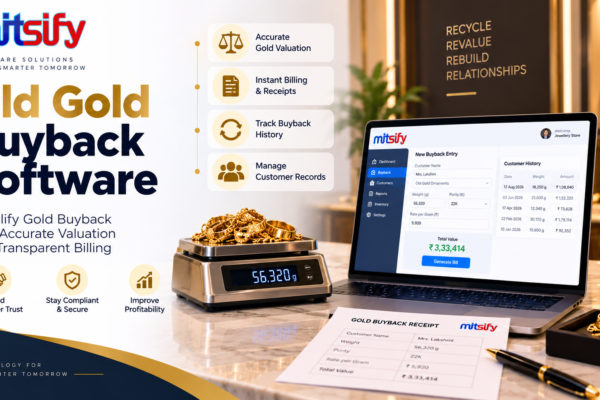
Old Gold Appraisal for Buyback Transactions
When a customer wants to sell old jewellery to the business, the shop needs to assess the item before determining the applicable buyback value.
An Old Gold Buyback Software workflow can help record the customer’s details, jewellery information, weight, purity, valuation and transaction details.
Read our related guide: Old Gold Buyback Software: Complete Guide for Jewellery Shops.
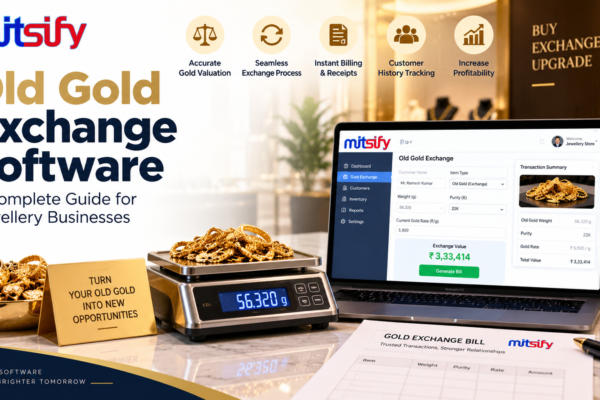
Old Gold Appraisal for Exchange Transactions
In an exchange transaction, the customer may provide old gold and purchase new jewellery.
The assessed old gold value may then be considered as part of the overall transaction according to the jewellery shop’s exchange policy.
For a detailed explanation, read: Old Gold Exchange Software: Complete Guide for Jewellery Shops.
How Old Gold Appraisal Connects With Jewellery Billing
Old gold assessment does not always operate as an isolated activity.
For example, an exchange transaction may involve:
- Customer brings old jewellery.
- Shop records the old jewellery details.
- Weight and purity are assessed.
- Old gold value is calculated.
- Customer selects new jewellery.
- Old gold value is adjusted according to the transaction process.
- New jewellery billing is completed.
A connected jewellery management system can help organize these activities more efficiently.
Features to Look for in Old Gold Appraisal Software
Before choosing software, jewellery businesses should evaluate whether it supports their actual appraisal workflow.
- Customer Management: Maintain customer information and transaction history.
- Weight Management: Record gross, non-gold and net weight information.
- Purity Management: Record applicable purity details.
- Gold Rate Management: Maintain the rate used for valuation.
- Valuation Calculation: Support the business’s defined valuation process.
- Buyback Management: Record old gold purchase transactions.
- Exchange Management: Support old gold exchange workflows.
- Reports: Review transaction information efficiently.
- Billing Integration: Connect appraisal with billing where supported.
- Inventory Integration: Connect relevant transactions with stock workflows where supported.
How to Choose the Right Old Gold Appraisal Software
Understand Your Current Workflow
Before selecting software, document how your employees currently receive, assess, value and process old gold transactions.
Check the Required Fields
Make sure the system supports the weight, purity, rate and transaction information your business actually needs.
Check Buyback and Exchange Workflows
If your shop handles both buyback and exchange transactions, evaluate whether the software supports both processes.
Check Reports
Review whether the available reports can help your business monitor old gold transactions and customer records.
Check Billing and Inventory
For jewellery businesses that need an integrated system, evaluate how appraisal connects with billing and inventory management.
Consider Scalability
If your business operates multiple branches or plans to expand, consider whether the software can support the business as operations grow.
Old Gold Appraisal Software and Jewellery Business Digitization
Digitizing old gold appraisal is part of a broader move toward organized jewellery business management.
Instead of maintaining separate records for customer information, appraisal, buyback, exchange and billing, businesses can look for software that brings related processes into a connected workflow.
This can make information easier to access and reduce unnecessary manual work.
Mitsify Gold Billing Software for Jewellery Businesses
Mitsify provides software solutions for jewellery businesses looking to manage their daily operations digitally.
Mitsify Gold Billing Software supports important jewellery business functions such as POS billing, estimates, barcode generation, stock management, purchase management, branch management, discount management and reports.
For businesses handling old gold transactions, the broader jewellery software workflow can be evaluated based on requirements for old gold buyback, exchange, valuation, billing and inventory management.
Explore Mitsify Gold Billing Software →
Frequently Asked Questions
What is Old Gold Appraisal Software?
Old Gold Appraisal Software is a digital system that helps jewellery businesses record and manage old gold assessment information such as weight, purity, valuation inputs, customer details and transaction records.
What is old gold appraisal?
Old gold appraisal is the process of assessing old jewellery to determine information such as weight, purity and applicable valuation details before a buyback or exchange transaction.
Why is purity important in old gold appraisal?
Purity helps determine the proportion of gold represented by the jewellery item and can therefore affect its valuation.
Can old gold appraisal software manage buyback transactions?
Depending on the software, old gold appraisal can be connected with buyback workflows to record customer details, jewellery information, valuation and transaction history.
Can old gold appraisal software support exchange transactions?
Yes, software may support old gold exchange workflows where the assessed old gold value is considered as part of a new jewellery purchase, depending on the system’s capabilities.
Can old gold appraisal connect with jewellery billing?
Depending on the software, appraisal information can be connected with jewellery billing workflows to reduce duplicate data entry and improve transaction management.
Is an old gold calculator the same as appraisal software?
No. A calculator generally focuses on performing a calculation, while appraisal software can provide a broader workflow for customer records, assessment information, transactions, history and reporting.
Related Articles
- Old Gold Exchange Software: Complete Guide for Jewellery Shops
- Old Gold Buyback Software: Complete Guide for Jewellery Shops
- How Jewellery Shops Calculate Old Gold Value: Complete Guide
- How Gold Billing Software Helps Jewellery Shops Manage Inventory
- Gold Jewellery Billing Software: Features Every Jeweller Needs
- Jewellery ERP Software: Complete Guide for Jewellery Businesses
Conclusion
Old gold appraisal is an important part of jewellery buyback and exchange operations. Weight, purity, gold rate and applicable valuation rules all need to be handled carefully to maintain a consistent process.
Old Gold Appraisal Software can help jewellery businesses digitize customer records, appraisal information, valuation workflows, transactions and reporting.
For jewellery businesses looking to move from manual processes to organized digital management, evaluating an integrated jewellery billing and management solution can be a useful step.