Calculating the value of old gold is an important part of daily operations for jewellery shops, gold buyers and jewellery businesses. When a customer brings old jewellery for buyback or exchange, the shop needs to evaluate the item’s weight, purity, applicable gold rate and other valuation factors before arriving at the final value.
A systematic Old Gold Valuation process helps jewellery businesses maintain accurate calculations, reduce manual errors and provide customers with a clear explanation of how the value was determined.
In this guide, we explain how jewellery shops calculate old gold value, the factors involved in the calculation, common deductions, the difference between buyback and exchange valuation, and how Old Gold Buyback Software can simplify the process.
What Is Old Gold Valuation?
Old Gold Valuation is the process of determining the estimated monetary value of gold jewellery brought by a customer for selling, buyback or exchange.
The valuation normally considers factors such as:
- Gross weight of the jewellery
- Stone or non-gold weight
- Net gold weight
- Gold purity
- Applicable gold rate
- Applicable deductions
- Customer transaction type
- Final payable or exchange value
The exact process and deductions can vary between businesses and transaction policies. Therefore, jewellery shops should clearly define their valuation rules and communicate them to customers.
Why Accurate Old Gold Valuation Is Important
Old gold transactions involve financial calculations, customer records and inventory adjustments. Even a small calculation error can affect the transaction value.
Accurate valuation helps jewellery shops:
- Calculate old gold value consistently
- Reduce manual calculation errors
- Maintain customer transaction records
- Improve transparency
- Manage gold purchases and exchanges
- Track old gold received from customers
- Generate transaction reports
- Connect old gold transactions with billing and inventory
Key Factors Used to Calculate Old Gold Value
Several factors may be considered when calculating the value of old jewellery.
1. Gross Weight
Gross weight is the total weight of the jewellery item measured before removing the weight of stones or other non-gold components.
For example, a jewellery item may contain gold along with stones, beads, enamel or other materials. Therefore, gross weight alone may not represent the actual gold weight.
2. Stone and Non-Gold Weight
If a jewellery item contains stones or other non-gold materials, the shop may determine the weight attributable to those materials according to its valuation process.
The non-gold weight may then be deducted from the gross weight to arrive at an estimated net gold weight.
3. Net Gold Weight
Net gold weight represents the estimated weight of gold considered for valuation after applicable non-gold deductions.
A simplified example is:
Net Gold Weight = Gross Weight − Applicable Non-Gold Weight
The actual calculation method can vary depending on the jewellery item and the shop’s valuation policy.
4. Gold Purity
Gold purity is another important factor in old gold valuation.
Jewellery may be available in different purity levels. The purity is normally expressed using fineness or karat values.
Common examples include:
- 24K gold
- 22K gold
- 18K gold
- 14K gold
The purity value helps determine how much pure gold is contained in the jewellery being evaluated.
5. Applicable Gold Rate
The applicable gold rate is another important input in the valuation calculation.
Jewellery businesses may use their applicable buying, exchange or internal valuation rate depending on the transaction type and business policy.
Because gold prices can change, the rate used for a transaction should be clearly recorded along with the valuation details.
6. Applicable Deductions
Depending on the transaction and business policy, certain deductions may apply.
Possible considerations can include:
- Non-gold material weight
- Purity-related adjustments
- Processing or refining considerations
- Business-specific buyback policies
- Other applicable transaction adjustments
Jewellery shops should define these rules clearly rather than relying on inconsistent manual calculations.
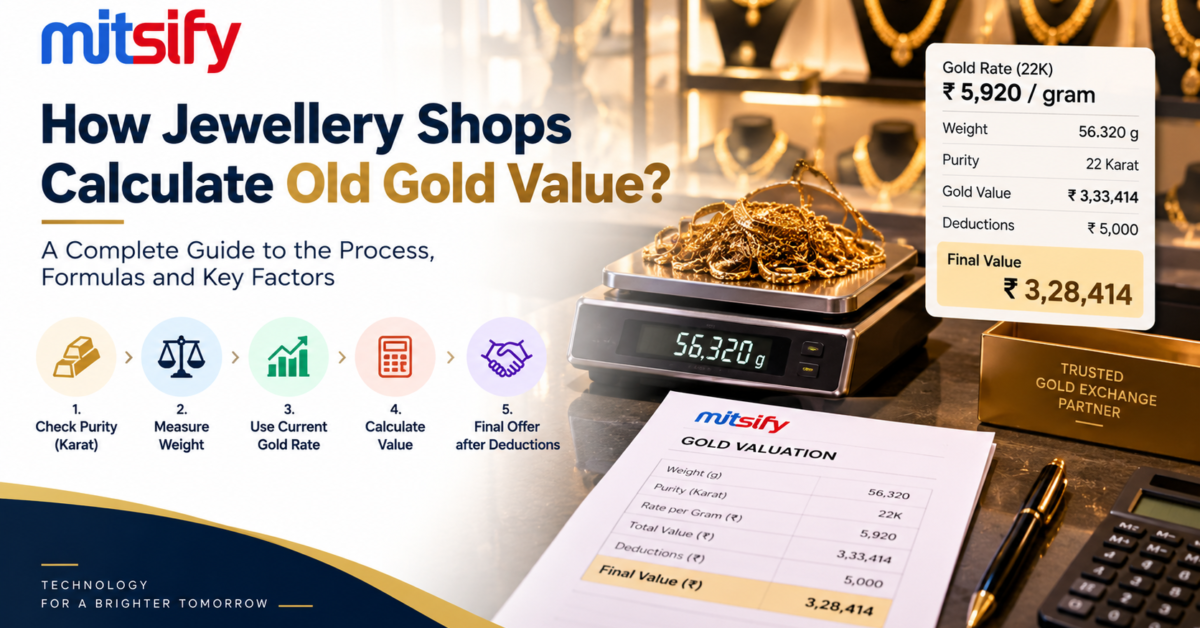
Basic Old Gold Value Calculation
A simplified conceptual calculation can be represented as:
Old Gold Value = Net Gold Weight × Applicable Gold Rate × Purity Factor
The actual formula used by a jewellery business can be more detailed depending on its valuation rules, transaction type and applicable deductions.
For this reason, jewellery shops should configure their valuation process carefully and maintain a record of the inputs used for every transaction.
Example of Old Gold Valuation
Consider a simple example where a customer brings an old gold jewellery item to a jewellery shop.
| Valuation Factor | Example |
|---|---|
| Gross Weight | 20 grams |
| Non-Gold Weight | 2 grams |
| Net Gold Weight | 18 grams |
| Purity | 22K |
| Applicable Gold Rate | Business-defined rate |
In this example, the shop first identifies the net gold weight and then applies the relevant purity and rate calculations according to its valuation policy.
This demonstrates why simply multiplying the total jewellery weight by the gold rate may not always produce the appropriate valuation.
How Gold Purity Affects Old Gold Value
Purity has a direct role in determining the amount of pure gold represented by a jewellery item.
For example, two jewellery items may have the same weight but different purity levels. Their valuation may therefore be different.
A jewellery shop should record the tested or accepted purity along with the weight and rate used during the transaction.
Old Gold Buyback vs Old Gold Exchange
Old gold transactions can generally be handled as either a buyback transaction or an exchange transaction.
| Factor | Old Gold Buyback | Old Gold Exchange |
|---|---|---|
| Purpose | Customer sells old gold | Customer exchanges old gold for new jewellery |
| Valuation | Old gold value is calculated | Old gold value is adjusted against new purchase |
| Customer Output | Applicable payment | Adjustment against new jewellery purchase |
| Record Keeping | Buyback transaction record | Exchange and billing record |
Both transaction types require accurate valuation and proper record keeping.
Common Problems With Manual Old Gold Valuation
When jewellery shops rely entirely on notebooks, calculators or spreadsheets, several problems can occur.
Manual Calculation Errors
Multiple values such as weight, purity, rate and deductions need to be considered. Manual calculations can lead to data-entry or calculation mistakes.
Inconsistent Valuation
Different employees may use different calculation methods if there is no standardized valuation process.
Difficulty Tracking Transactions
Finding previous old gold transactions can be difficult when records are maintained manually.
Limited Reporting
Preparing reports for old gold purchases, customer transactions and valuation history can take additional time.
Duplicate Data Entry
When old gold details are calculated separately and then manually entered into billing records, duplicate data entry can increase the possibility of errors.
How Old Gold Valuation Software Helps Jewellery Shops
Old Gold Valuation Software can help jewellery businesses organize the valuation workflow digitally.
Depending on the software and configuration, the system can help manage:
- Customer details
- Old gold weight
- Purity details
- Gold rates
- Valuation calculations
- Buyback transactions
- Exchange transactions
- Customer adjustments
- Transaction history
- Reports
The main benefit is that the valuation process can become more structured and easier to track.
Old Gold Valuation Workflow
A typical digital workflow can follow these steps:
- Register or select the customer.
- Record the old jewellery details.
- Enter the gross weight.
- Record applicable stone or non-gold weight.
- Determine the net gold weight.
- Record the purity.
- Apply the applicable gold rate.
- Apply configured valuation adjustments or deductions.
- Calculate the old gold value.
- Choose buyback or exchange transaction.
- Generate the applicable transaction or bill.
- Save the transaction for future reference.
What Should Jewellery Shops Record During Old Gold Valuation?
Maintaining complete transaction information can make future reference and reporting easier.
Important information may include:
- Customer name
- Customer contact details
- Transaction date
- Jewellery item description
- Gross weight
- Stone or non-gold weight
- Net gold weight
- Purity
- Gold rate used
- Valuation value
- Applicable deductions
- Buyback or exchange type
- Final transaction value
Old Gold Value Calculator vs Old Gold Valuation Software
| Feature | Old Gold Value Calculator | Old Gold Valuation Software |
|---|---|---|
| Basic Calculation | Yes | Yes |
| Customer Records | Usually limited | Yes |
| Transaction History | Limited | Yes |
| Buyback Management | Limited | Yes |
| Exchange Management | Limited | Yes |
| Reporting | Limited | Yes |
| Billing Integration | Usually not available | Depending on software |
A calculator can be useful for individual calculations, while dedicated software is more suitable for businesses that need transaction records, reporting and workflow management.
Benefits of Digital Old Gold Valuation
- Faster calculations: Reduce repetitive manual calculations.
- Better records: Maintain organized customer and transaction information.
- Improved consistency: Follow a defined valuation workflow.
- Easy history tracking: Find previous transactions when required.
- Better reporting: Review old gold transactions more efficiently.
- Reduced duplicate entry: Connect valuation details with other business processes where supported.
- Better customer communication: Show the valuation inputs more clearly.
How Old Gold Software Can Work With Gold Billing Software
Old gold transactions are often connected with the broader jewellery billing process.
For example, when a customer exchanges old gold for new jewellery, the old gold value may need to be considered while preparing the new jewellery bill.
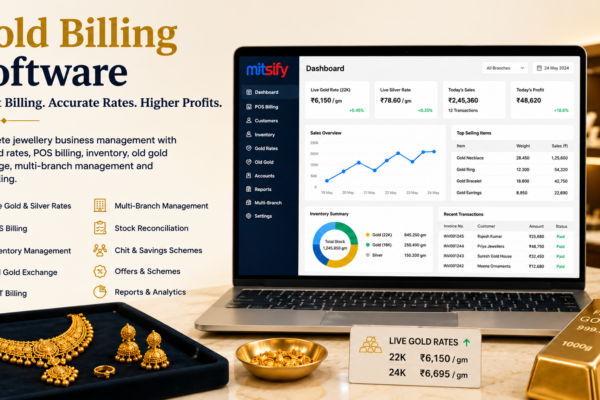
A connected Gold Billing Software solution can help jewellery businesses manage billing, inventory and related transaction information from a more centralized system.
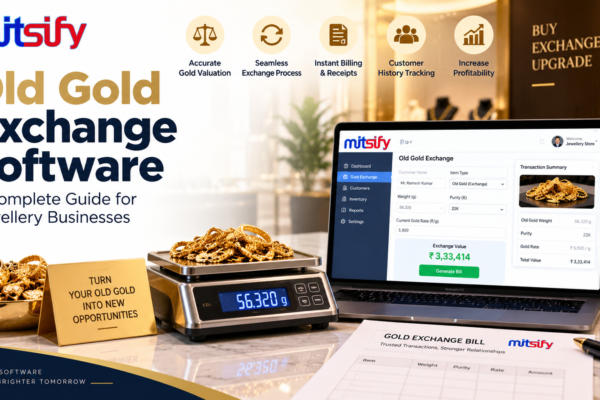
For a detailed overview, read our guide on Old Gold Exchange Software.
You can also learn more about Old Gold Buyback Software and how digital systems can support old gold purchase transactions.
How to Choose Old Gold Valuation Software
Before selecting software, jewellery businesses should evaluate whether it supports their actual daily workflow.
Check Weight and Purity Management
The software should allow the business to record relevant weight and purity information accurately.
Check Buyback and Exchange Support
If the business handles both transactions, the software should support the required workflows.
Check Customer Records
Customer transaction history can be useful when managing repeat customers and reviewing previous transactions.
Check Reports
Look for reports that help the business understand old gold purchases, valuations and transactions.
Check Billing Integration
If old gold transactions are frequently connected to new jewellery sales, integration with billing can simplify the overall workflow.
Check Inventory Management
Old gold received by a jewellery business may eventually become part of its broader stock or processing workflow. Therefore, inventory-related capabilities should also be evaluated.
Why Jewellery Shops Should Standardize Old Gold Valuation
Standardization is important when multiple employees handle customer transactions.
A defined process ensures that employees consistently record:
- Weight
- Purity
- Applicable rate
- Deductions
- Final valuation
- Transaction type
This can make the process easier to monitor and reduce inconsistencies between transactions.
Mitsify for Jewellery Business Management
Mitsify provides software solutions designed to help jewellery businesses manage important day-to-day operations digitally.
For jewellery businesses looking to manage gold-related billing and business operations, Mitsify Gold Billing Software can help manage areas such as POS billing, estimates, barcode generation, stock management, purchase management, branch management, discounts and reports.
Businesses that handle old gold transactions can also evaluate how their old gold buyback, exchange, valuation and billing workflow can be organized within their overall jewellery software environment.
Explore Mitsify Gold Billing Software →
Frequently Asked Questions About Old Gold Valuation
How is old gold value calculated?
Old gold value is generally determined using factors such as net gold weight, purity and the applicable gold rate, along with any relevant business-specific adjustments or deductions.
Does gross weight equal gold weight?
Not necessarily. Jewellery may contain stones or other non-gold materials. Therefore, the gross weight may need to be adjusted to determine the net gold weight considered for valuation.
Why is gold purity important in old gold valuation?
Gold purity indicates the proportion of gold represented by the jewellery item and can therefore affect its valuation.
What is an old gold value calculator?
An old gold value calculator is a tool that can help estimate the value of old gold based on inputs such as weight, purity and applicable gold rate.
What is Old Gold Valuation Software?
Old Gold Valuation Software is a digital system designed to help jewellery businesses manage old gold valuation information, customer records, transactions and related reporting.
What is the difference between old gold buyback and exchange?
In a buyback transaction, the customer sells old gold to the jewellery business. In an exchange transaction, the old gold value is generally adjusted against the purchase of new jewellery according to the business’s applicable rules.
Can old gold valuation be connected with jewellery billing?
Yes. Depending on the software, old gold valuation can be connected with jewellery billing workflows so that the old gold value can be considered during an exchange or related transaction.
Related Jewellery Software Articles
- Old Gold Exchange Software: Complete Guide for Jewellery Shops
- Old Gold Buyback Software: Complete Guide for Jewellery Shops
- How Gold Billing Software Helps Jewellery Shops Manage Inventory
- Gold Jewellery Billing Software: Features Every Jeweller Needs
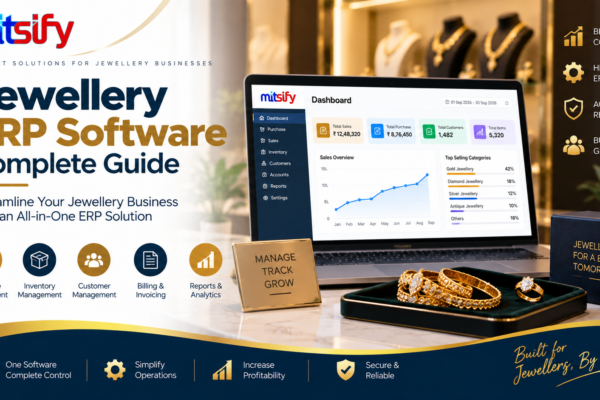
- Jewellery ERP Software: Complete Guide for Jewellery Businesses
- Best Features to Look for in Jewellery Billing Software
Conclusion
Old gold valuation is an important process for jewellery shops handling gold buyback and exchange transactions. Weight, purity, gold rate and applicable adjustments all need to be considered carefully to arrive at a consistent valuation.
Moving from manual calculations to a structured digital process can help jewellery businesses maintain better records, improve workflow consistency and manage old gold transactions more efficiently.
If your jewellery business is looking to manage billing, inventory and gold-related operations through a digital system, explore Mitsify Gold Billing Software.