Jewellery inventory is different from ordinary retail inventory. A jewellery shop may need to track individual products along with weight, purity, metal type, purchase details, sales, returns and stock movements.
Because jewellery inventory is closely connected to weight and value, maintaining accurate stock records is an important part of daily jewellery business operations.
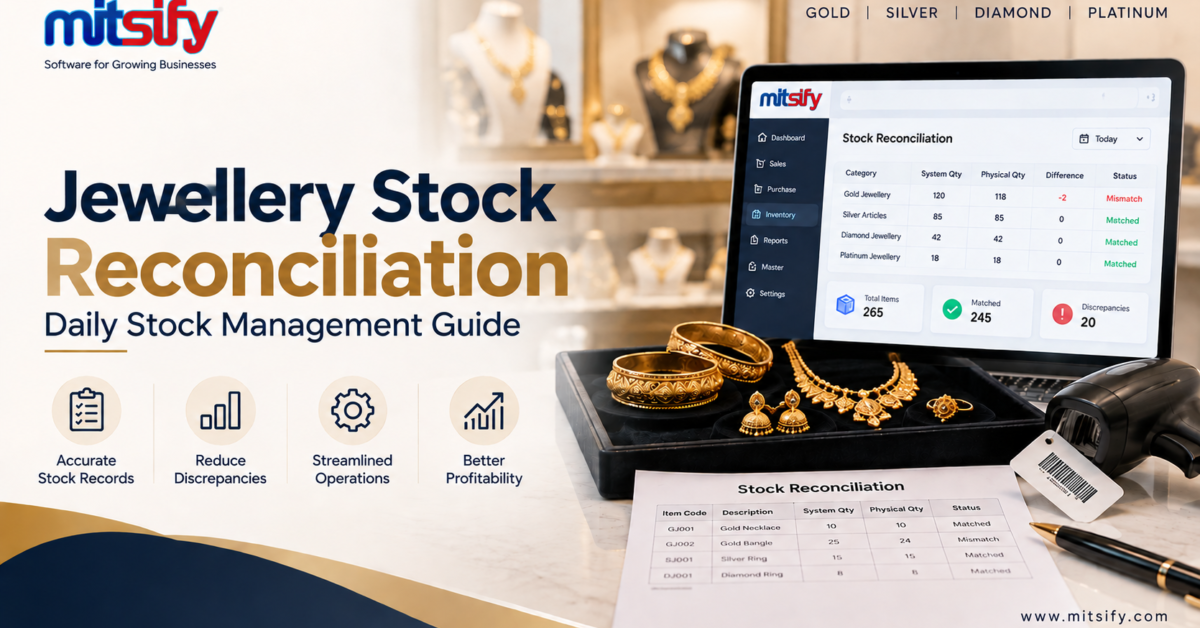
Jewellery stock reconciliation is the process of comparing expected stock records with actual physical stock and identifying differences that may need investigation.
In this guide, we explain what jewellery stock reconciliation means, how daily stock tracking works, common challenges faced by jewellery shops, and how jewellery inventory software can help create a more connected stock management process.
What Is Jewellery Stock Reconciliation?
Jewellery stock reconciliation means comparing the stock recorded in the business system with the physical stock available in the jewellery shop.
A simplified reconciliation process can be represented as:
Opening Stock + Purchases + Stock In – Sales – Returns/Transfers Out = Expected Closing Stock
The expected stock can then be compared with the actual physical stock.
For jewellery businesses, reconciliation may involve both item-level information and weight-based information.
Why Is Jewellery Stock Reconciliation Important?
Jewellery stock represents significant business value. Even small differences in inventory records can require careful investigation.
Regular reconciliation can help businesses:
- Identify stock differences
- Verify inventory records
- Track stock movement
- Review purchase and sales entries
- Monitor branch transfers
- Check returned items
- Improve inventory visibility
- Maintain more systematic daily records
What Should a Jewellery Shop Track?
A jewellery inventory system may need to track several different types of information.
1. Product Quantity
The business needs to know how many individual jewellery items are currently available.
2. Gross Weight
Gross weight represents the total weight of the jewellery item before applicable deductions.
3. Stone or Other Weight
Where applicable, stone or non-metal weight may need to be recorded separately.
4. Net Weight
Net weight is important for inventory and valuation calculations based on the business workflow.
5. Purity
Gold and other precious-metal products can have different purity levels. Stock records should preserve the relevant purity information.
6. Product Movement
Purchases, sales, returns and transfers can change the available stock. Each movement should be reflected in the inventory records.
How Does Daily Jewellery Stock Reconciliation Work?
A typical daily process can follow these steps.
Step 1: Check Opening Stock
Start with the previous day’s closing inventory or the current opening stock record.
Step 2: Record Purchases
Any jewellery received through purchases should be added to the inventory.
Step 3: Record Stock Transfers
If products move between branches or locations, the stock movement should be recorded.
Step 4: Record Sales
Items sold during the day should be removed from the available stock.
Step 5: Record Returns
Purchase returns and sales returns can affect the stock balance and should be reflected in the records.
Step 6: Calculate Expected Closing Stock
The software or stock records can calculate the expected closing inventory based on the day’s transactions.
Step 7: Verify Physical Stock
Staff can verify the physical jewellery available in the shop against the recorded stock.
Step 8: Investigate Differences
If physical stock and system stock do not match, the business can review relevant transactions and identify the reason for the difference.
Example of Jewellery Stock Reconciliation
Consider a simple example.
| Stock Movement | Items | Weight |
|---|---|---|
| Opening Stock | 100 | 2,500 g |
| Purchase | 20 | 500 g |
| Sales | 15 | 350 g |
| Expected Closing Stock | 105 | 2,650 g |
The actual physical stock can then be compared with the expected stock record.
The exact reconciliation method will depend on the jewellery shop’s inventory structure, product types and business processes.
Common Jewellery Stock Reconciliation Problems
Manual Records
When stock movements are maintained across registers, spreadsheets and separate systems, collecting accurate information can take time.
Delayed Stock Updates
If sales, purchases or transfers are not recorded immediately, the system may not represent the latest stock position.
Multiple Branches
Businesses with multiple branches need to track stock movement between locations.
Different Jewellery Categories
Gold, silver, diamond and platinum products may require different inventory information and business rules.
Returns and Adjustments
Returns, corrections and adjustments can affect inventory records and should be properly documented.
Gold Stock Reconciliation
Gold inventory requires particular attention because weight and purity are important components of stock management.
A gold stock reconciliation process may involve checking:
- Gold category
- Item count
- Gross weight
- Net weight
- Purity
- Purchase stock
- Sales stock
- Returned stock
- Transferred stock
- Available closing stock
For businesses dealing with large jewellery inventories, maintaining these records manually can become increasingly difficult.
Jewellery Stock Reconciliation for Multiple Branches
Multi-branch jewellery businesses have an additional challenge: stock can move between different locations.
For example:
Branch A → Stock Transfer → Branch B
The system should reflect the reduction in Branch A and the corresponding increase in Branch B.
Branch-wise reconciliation can help business owners understand:
- Available stock by branch
- Stock transferred between branches
- Sales by branch
- Purchase by branch
- Branch closing stock
- Differences requiring review
How Jewellery Software Helps With Stock Reconciliation
A jewellery-focused software system can connect different business transactions to the inventory.
For example:
- Purchase → Stock Added
- Barcode Generation → Item Identified
- Sale → Stock Reduced
- Sale Return → Stock Updated
- Purchase Return → Stock Adjusted
- Stock Transfer → Branch Stock Updated
- Reports → Stock Visibility
This connected workflow can reduce the need to maintain separate stock records for every business activity.
What Reports Are Useful for Jewellery Stock Reconciliation?
Depending on the software, useful reports may include:
- Current Stock Report
- Daily Stock Report
- Purchase Report
- Sales Report
- Sales Return Report
- Purchase Return Report
- Stock Transfer Report
- Branch-wise Stock Report
- Weight-wise Stock Report
- Product-wise Stock Report
Reports can help business owners review inventory movement without manually combining information from different records.
Best Practices for Jewellery Stock Reconciliation
- Update purchase and sales transactions promptly.
- Use unique product identification where appropriate.
- Record stock transfers between branches.
- Keep returns and adjustments properly documented.
- Review stock reports regularly.
- Compare system stock with physical stock periodically.
- Investigate unexplained differences.
- Use role-based access for important inventory operations.
- Maintain regular backups of business data.
How Mitsify Gold Billing Software Helps Manage Jewellery Stock
Mitsify Gold Billing Software is designed to connect jewellery billing, inventory and other business operations in one system.
The system supports important jewellery business workflows including:
- Gold, Silver, Diamond and Platinum inventory
- Purchase management
- Stock management
- Barcode generation
- POS billing
- Estimates
- Sales and purchase returns
- Stock transfers
- Branch management
- Old gold workflows
- Business reports
By connecting transactions with inventory, jewellery businesses can maintain a more systematic view of stock movement and use reports to review their inventory position.
Learn more: Mitsify Gold Billing Software
Conclusion
Jewellery stock reconciliation is an important part of maintaining accurate inventory records. Because jewellery businesses deal with individual items, weight, purity, purchases, sales, returns and stock transfers, stock management requires more than simply counting products.
A connected jewellery inventory system can bring these transactions together and provide better visibility into expected stock and actual stock.
For jewellery businesses looking to improve their inventory workflow, jewellery stock reconciliation software can help create a more structured process for tracking daily stock, branch movements and inventory reports.
Frequently Asked Questions
What is jewellery stock reconciliation?
Jewellery stock reconciliation is the process of comparing recorded inventory with actual physical stock and reviewing differences between them.
Why is stock reconciliation important for jewellery shops?
Jewellery inventory involves individual products, weight, purity and high-value transactions. Regular reconciliation can help businesses identify stock differences and maintain better inventory visibility.
What information should jewellery stock records contain?
Depending on the business, stock records can include product details, quantity, gross weight, net weight, purity, purchase information, sales, returns and stock movements.
Can jewellery software manage branch-wise stock?
Yes. Jewellery inventory software with branch management can help businesses track stock by branch and record transfers between locations.
How does barcode software help with stock reconciliation?
Barcode-based item identification can help businesses identify individual products and connect physical items with their digital inventory records.
How often should jewellery shops reconcile stock?
The appropriate frequency depends on the business size, inventory volume and internal controls. Many businesses benefit from regular review of stock records and periodic physical verification.